Last updated: August 31, 2026
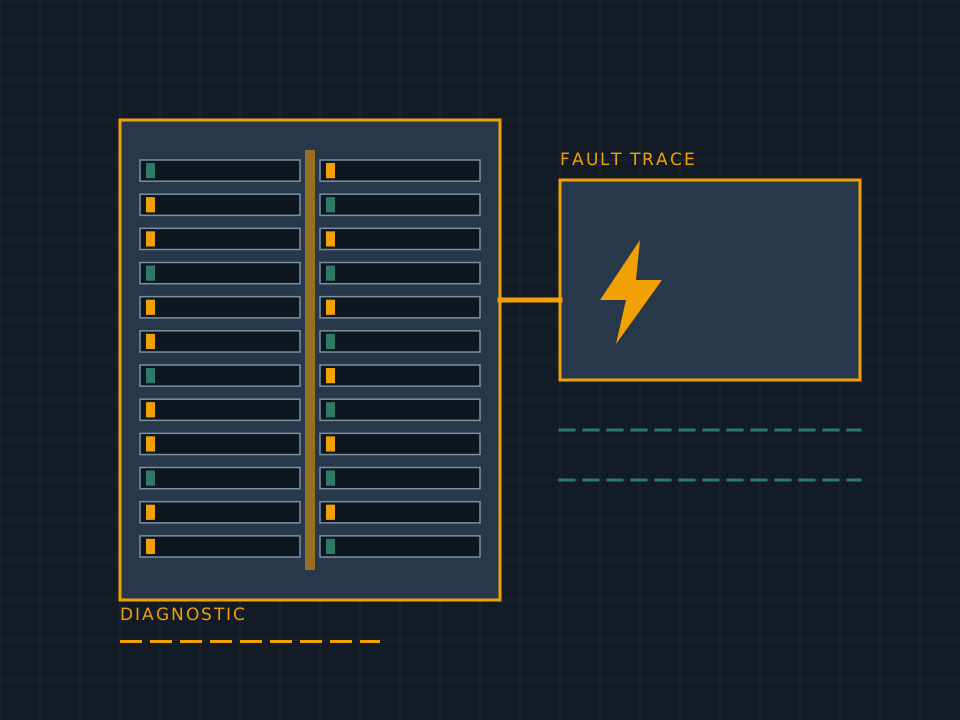
New Orleans Electrical Services connects homeowners and businesses with licensed electrical contractors providing diagnostic and repair work throughout New Orleans and Orleans Parish. Electrical repair in New Orleans is mostly fault-finding: the visible symptom is almost never where the problem is. A dead outlet is usually a failed back-stab connection or a loose neutral several boxes upstream, and a breaker that trips under load is reporting a real condition rather than misbehaving. We charge a flat diagnostic to find the cause and credit it against the repair.
What we do on the first visit
Every electrical repair job starts the same way: we look before we quote. You get the cause in writing, a price that does not move once work begins, and the permit filed by us rather than by you.
- Describe the symptom. On the phone we narrow it: one outlet, one room, one leg of the service, or intermittent under load.
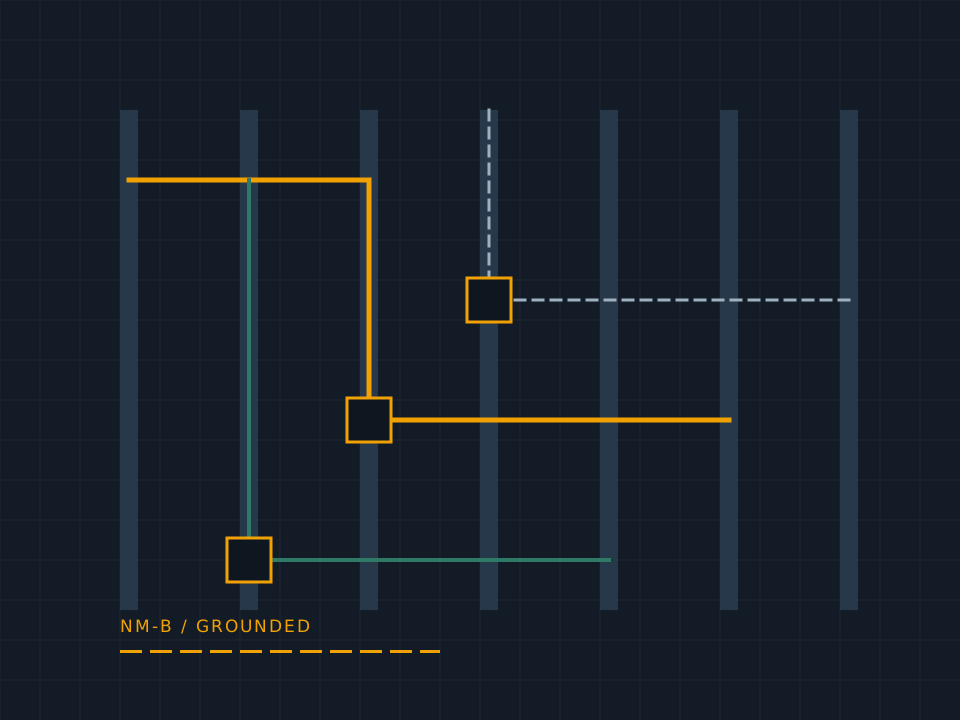
- Trace the actual circuit. We map what is really on that breaker, which in older houses here is rarely what the directory claims.
- Find the fault, not the symptom. Loose neutral, failed back-stab, corroded splice, overloaded circuit or a device at end of life.
- Quote, then repair. You see the cause and the price before we do the work. The diagnostic comes off the repair.
Why a tripping breaker is information, not a defect
The most common request we get is to replace a breaker that keeps tripping. That is almost always the wrong repair. A breaker is a calibrated safety device doing exactly what it was built to do, and swapping it for a larger one is how a nuisance becomes a fire, because the conductor behind it is sized for the original rating and nothing about the wire changed when the breaker did.
There are three distinct causes and they need different fixes. An overload means the circuit is carrying more current than it is rated for, usually because a window unit or a space heater has been added to a general lighting circuit; the fix is a dedicated circuit. A short circuit is a hot-to-neutral or hot-to-ground fault and it trips instantly and repeatably; the fix is finding the damaged conductor or device. A ground fault trips a GFCI rather than a standard breaker and usually means moisture, which in this climate is the most common of the three on exterior and bathroom circuits.
An AFCI breaker adds a fourth category. It trips on the signature of an arc rather than on current, which means it can trip on a deteriorating connection long before that connection is hot enough to notice. In an older house those trips are frequently correct and worth chasing rather than defeating.
The repairs that come up over and over in this housing stock
Back-stabbed receptacles are the single most common dead-outlet cause. Push-in terminals on the back of a device hold the conductor with a small spring clip, and after decades of thermal cycling that clip relaxes. The connection goes resistive, then intermittent, then open, and everything downstream on the circuit dies with it. The correct repair is to move the conductors to the side screws, which is why we replace rather than re-stab.
Shared or borrowed neutrals turn up constantly in houses that have been added to piecemeal. Someone extended a circuit and grabbed a neutral from a different one. It works until it does not, and the failure mode, a lost neutral, is genuinely dangerous because it can put unbalanced voltage across 120-volt equipment. If your lights brighten in one room when something switches on in another, that is the signature.
Corroded splices in damp under-house and attic spaces are the climate-driven one. Where salt air reaches a junction box, terminations oxidize, and an oxidized termination is a resistive termination. We find these by thermal signature under load rather than by looking, because the visible part of the box usually looks fine.
What is included
- Flat diagnostic fee quoted before we come out, credited to the repair
- Circuit tracing and panel mapping for the affected area
- Voltage drop and load testing under actual conditions
- Junction box inspection for loose, corroded or back-stab connections
- Written cause and scope before any repair begins
- Repair to NEC standard, not a patch to the same failed method
- Correctly labelled panel directory for the circuits we touch
- Permit where the work alters or adds a circuit
What you should expect to pay
HomeYou New Orleans electrical repair cost data (161 completed local projects, average $94-$125) cross-checked against 2026 national service-call fees of $79-$179.
| Job | Range |
|---|---|
| Diagnostic / service call | $95 - $145 |
| Electrical permit | $50 - $300 |
The diagnostic is credited in full against the repair if you go ahead the same visit. If the fix needs a part we do not carry, you get the written scope and price and no obligation to use us.
Run the cost estimator for a range against your own situation, or call 504-336-6748 and describe the job.