
What working in Metairie is actually like
Metairie is, electrically, a postwar suburb, and that single fact predicts most of what we find here. The bulk of the housing stock went up between roughly 1950 and 1980 on slab-on-grade construction, which puts a very large number of Metairie homes squarely in the aluminum branch wiring window of 1965 to 1975. Aluminum is a fine conductor; the failure is at the terminations, where a higher coefficient of thermal expansion works screw connections loose over decades until the joint goes resistive and heats. In Airline Park, Beverly Knoll and the subdivisions off West Esplanade this is the most common thing we are called out for, and it usually presents as a warm switch plate rather than anything dramatic.
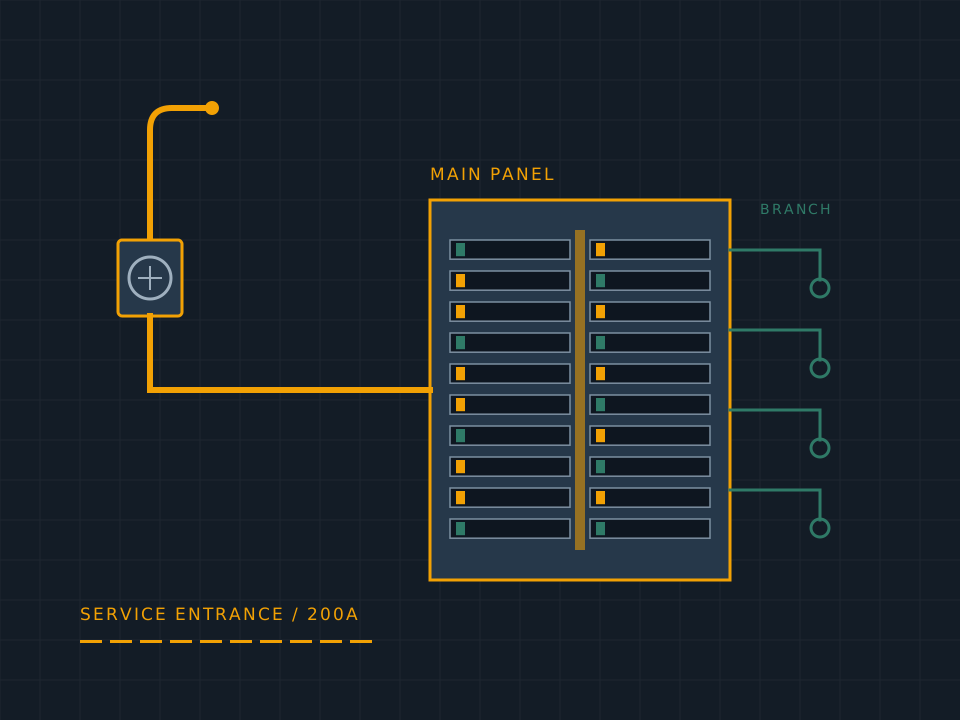
Slab construction changes the rewiring conversation too. Without a walkable under-house, every run has to come down from the attic or be surface-routed, which is why rewire quotes in Metairie sit higher per square foot than the same job on a raised cottage in Uptown. It also means the panel is almost always on an exterior wall near the meter, and exterior panels in this climate corrode. We check the bus and the service conductor terminations on every Metairie panel we open, because white oxidation on aluminum service entrance conductors is common enough here to be worth looking for specifically.
The lake side of Metairie adds salt air to the humidity. In Bucktown, Lake Villa and the streets north of West Esplanade, exterior devices, weatherheads, meter cans and any junction box in a vented attic corrode measurably faster than they do a few miles inland. Old Metairie is the exception to the whole picture: the housing there is older and larger, frequently with knob-and-tube or cloth-insulated conductor still live in original rooms, and the work is closer to what we do Uptown than to what we do in the rest of the parish. Drainage matters as well; the streets that pond during a hard rain are the ones where we most often find corroded splices in low junction boxes.