Last updated: August 31, 2026
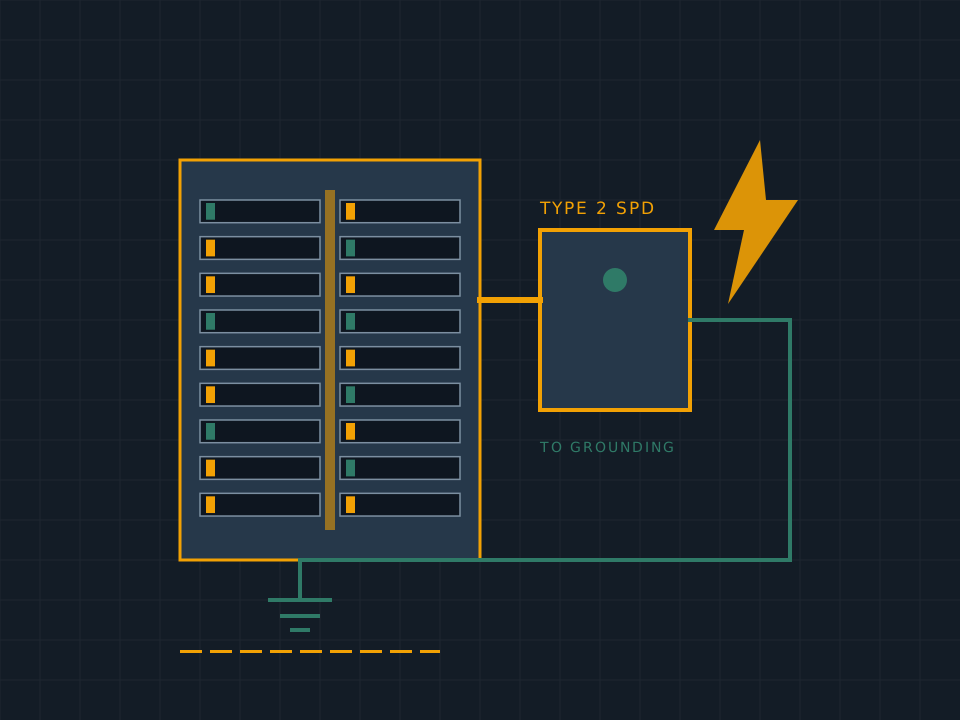
New Orleans Electrical Services connects homeowners and businesses with licensed electrical contractors installing whole house surge protection across New Orleans and Orleans Parish. A whole house surge protector in New Orleans is a Type 2 surge protective device mounted at the service panel, where it clamps transient overvoltage before it reaches branch circuits. It is one of the few electrical upgrades that is cheap relative to what it protects, and in a metro that combines heavy lightning with frequent storm-driven grid switching, it is closer to basic equipment than to a luxury.
What we do on the first visit
Every whole house surge protection job starts the same way: we look before we quote. You get the cause in writing, a price that does not move once work begins, and the permit filed by us rather than by you.
- Test the ground first. A surge device can only divert energy to a good ground. We check the electrode system before quoting the device.
- Size to the service. Device rating matched to your service and to what is downstream, including any generator interconnection.
- Mount with short leads. Lead length directly degrades clamping performance. We mount for the shortest practical conductor run.
- Explain the indicator. SPDs are consumable. We show you the status light and what it means, so a spent device gets replaced.
Why panel-level protection and power strips are not the same thing
A surge strip at the desk protects what is plugged into that strip. It does nothing for your HVAC condenser, your oven control board, your well or sump pump, the LED drivers in your ceiling fixtures, or the garage door opener, all of which contain electronics and all of which are hardwired.
A Type 2 device at the panel clamps the transient at the service, before it distributes. The 2023 NEC edition raised the bar here as well: surge protective devices are required to have a nominal discharge current rating of at least 10 kiloamperes, which is a meaningful minimum specification to check on any quote.
The right arrangement is both, in series. Panel-level protection takes the large transient, and point-of-use protection at sensitive equipment handles what gets through and the smaller transients generated inside the house by motor loads switching. Neither replaces the other, and a contractor who tells you the panel device makes your strips unnecessary is overselling it.
The grounding problem that makes surge devices useless
A surge protective device works by diverting energy to the grounding electrode system. If that system is inadequate, the device has nowhere to put the energy and its clamping performance collapses. This is not a marginal effect; it is the difference between a device that works and an expensive indicator light.
Older services in this metro fail this test regularly, for reasons specific to the ground here. Ground rods driven into high water table soil corrode; connections at the rod are frequently buried, wet and never inspected; and a great many older homes rely on a water-pipe bond that stopped being a ground the day the utility replaced the metal service line with plastic. That last one is common and invisible.
So we test the electrode system before we quote a device. If the ground needs work, that is part of the scope, and we will tell you plainly that installing an SPD without it is not worth your money. This is also why surge protection is usually cheapest bundled with a panel upgrade, when the grounding electrode system is being brought to NEC 250 anyway.
What is included
- Grounding electrode system inspected and tested first
- Type 2 SPD listed to UL 1449 sized to the service
- Device mounted with the shortest practical lead length
- Bonding verified per NEC Article 250
- Point-of-use protection recommended for sensitive equipment
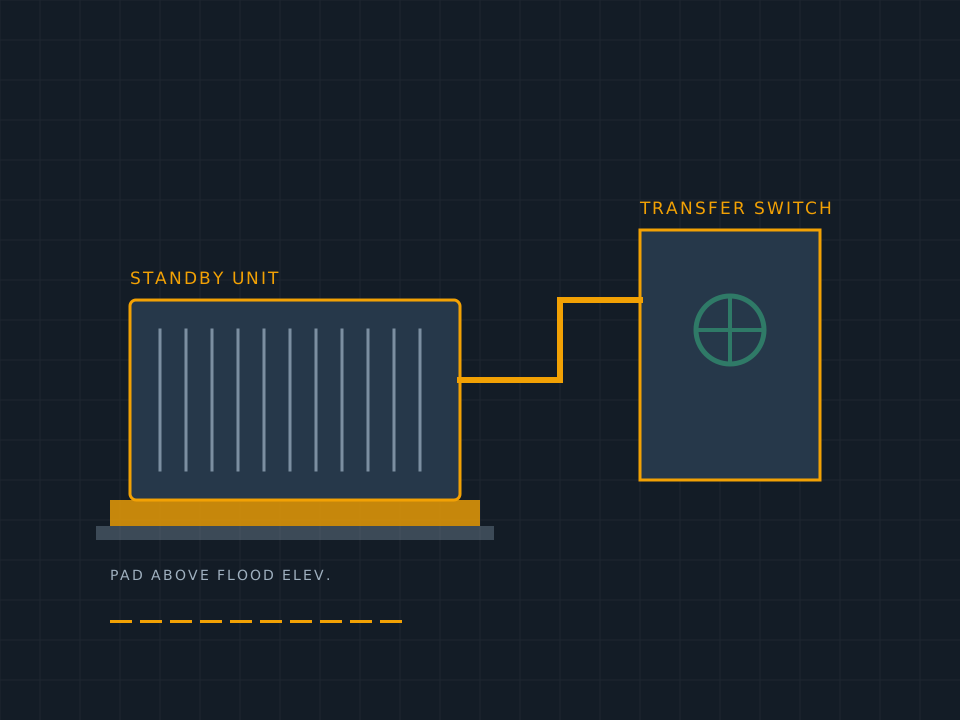
- Coordination with any generator or solar interconnection
- Status indication explained so you know when it has done its job
- Permit where the panel work requires one
What you should expect to pay
We quote surge protection on site because the price depends on whether your panel has the space and the bus configuration for a listed Type 2 device, and on whether the grounding electrode system is adequate, which on older services here it frequently is not. A surge device bonded to a poor ground is decoration.
| Component we can publish | Range |
|---|---|
| Panel replacement, same amperage | $1,200 - $2,400 |
| Electrical permit | $50 - $300 |